Namche Bazar: Gateway to the Everest Trek
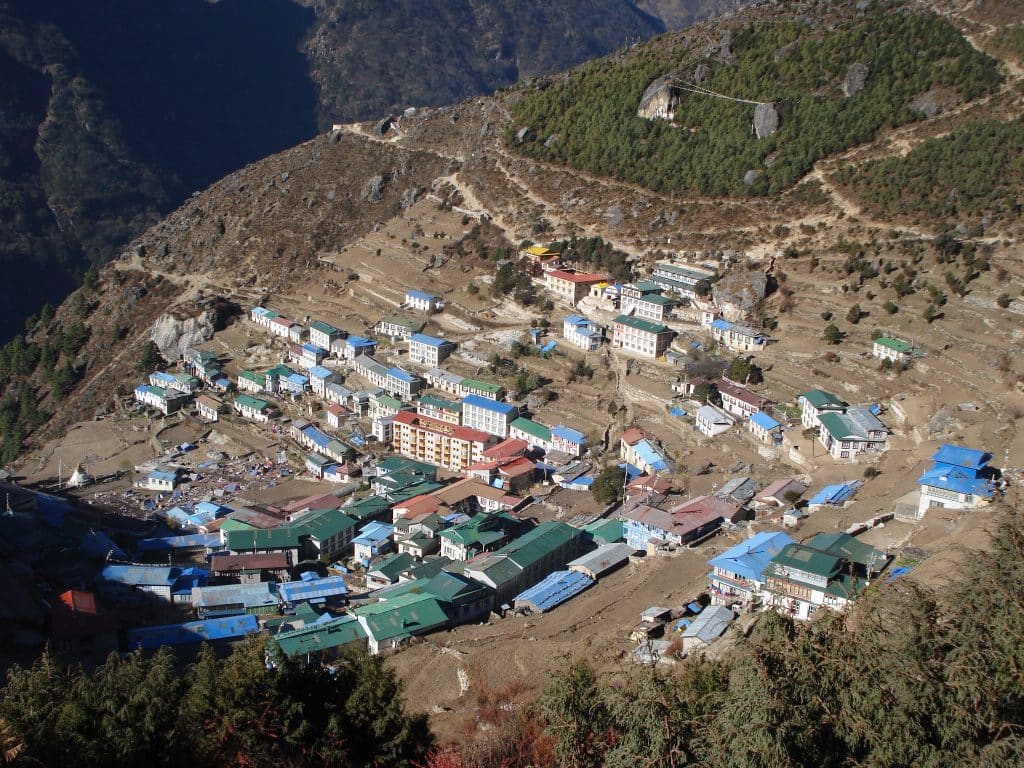
You crest the final steep switchbacks after the Hillary Suspension Bridge, lungs working harder than they did in Phakding, and suddenly the valley opens. Below you, stacked in a natural amphitheatre of stone buildings, prayer flags, and terraced roofs, sits Namche Bazaar. Kongde Ri and Thamserku frame the bowl. This is the moment most people on an Everest Region Trek feel the journey truly begin.
Namche is not just another overnight stop. It is the commercial and cultural heart of the Khumbu, the last proper town before the high trail, and the essential first acclimatisation hub for almost every major itinerary in the region. Whether you are doing the classic Everest Base Camp Trek, the Everest Base Camp Trek with Helicopter Return, the scenic Everest View Trek, the longer Jiri to Everest Base Camp Trek, the Gokyo Valley Trek, the demanding Everest Three Passes Trek, the combined EBC with Gokyo Lake Trek, or a quicker Everest Base Camp Short Trek, your route almost certainly passes through this lively Sherpa town.
This guide covers everything you actually need to know before you arrive: where Namche sits, why it matters on every major Everest itinerary, the walk in, what a night (or two) here feels like, facilities, food, the famous Saturday market, and the practical realities of altitude and logistics. I’ve kept it practical and honest so you arrive knowing what to expect.
Where Is Namche Bazaar?
Namche Bazaar sits at 3,440 metres (11,286 feet) in the Solukhumbu District of Nepal, inside the buffer zone of Sagarmatha National Park, a UNESCO World Heritage Site. It occupies a horseshoe-shaped hillside above the confluence of the Dudh Koshi and Bhote Koshi rivers. On the standard routes it is the major settlement after the two-day walk from Lukla (via Phakding and Monjo).
Unlike higher stops such as Lobuche or Gorakshep, Namche is a genuine Sherpa town with permanent residents, shops, schools, and a long history as a trading post between Tibet and the lowlands. For centuries yak caravans brought salt and wool south over the Nangpa La while grain and goods moved north. That trading energy still shapes the place today, though the main customers are now trekkers and climbers heading into the high Khumbu.
Because of its location and altitude, Namche is the standard first serious acclimatisation stop on virtually every Everest Region Trek. Most responsible itineraries schedule two nights here before continuing higher.
Which Treks Pass Through Namche Bazaar?
Namche is the natural crossroads of the entire Everest region. Almost every major itinerary runs straight through it:
- Everest Base Camp Trek — the classic route, where Namche is your first major overnight and acclimatisation stop before Tengboche and beyond.
- Everest Base Camp Trek with Helicopter Return — same trail up through Namche, then a scenic helicopter flight out after reaching base camp or Kala Patthar.
- Everest View Trek — a shorter journey that often turns around near Namche or the Everest View Hotel, making the town the highlight rather than a waypoint.
- Jiri to Everest Base Camp Trek — the traditional longer approach that still joins the main trail at Namche after days of walking from the lower Solu-Khumbu.
- Gokyo Valley Trek — trekkers heading to the turquoise lakes usually pass through Namche before branching toward the Gokyo valley.
- Everest Three Passes Trek — the most demanding circuit of all, which uses Namche as the starting hub before tackling Kongma La, Cho La, and Renjo La.
- EBC with Gokyo Lake Trek — the popular combination that links Gokyo with Everest Base Camp, rejoining or departing via Namche.
- Everest Base Camp Short Trek — condensed itineraries that still include the essential acclimatisation nights in Namche before pushing higher more quickly.
-
Island Peak Climbing — climbers use Namche as the key acclimatisation and preparation stop before continuing to Chhukung and Island Peak Base Camp.
-
Lobuche Peak Climbing — most Lobuche East expeditions pass through Namche for rest, gear checks, and acclimatisation before heading toward Lobuche village and the peak.
Because so many routes converge here, Namche often feels busier than its size suggests, especially in peak season. You’ll meet people heading in every direction, swapping notes on the passes, the weather, and how they’re handling the altitude. That mix of travellers is part of its charm.
Getting to Namche: The Walk In
Most people fly into Lukla (2,860 m) and walk two days. Day 1 is a gentle descent and riverside walk to Phakding (around 2,610 m). Day 2 is the defining stage: Phakding to Namche, roughly 11–12 km and 5–7 hours depending on pace.
The trail follows the Dudh Koshi, crosses several suspension bridges (including the high Hillary Bridge), passes the Sagarmatha National Park entrance at Monjo, and then climbs steadily. The final 600–800 m of elevation gain on the “Namche Hill” is the part everyone remembers. It is steep, continuous, and done at altitude, so take it slowly. The sudden view of the town stacked in its amphitheatre is the reward.
Those on the Jiri to Everest Base Camp Trek arrive after many more days on the trail and often feel the same sense of arrival when they finally reach Namche.
What Makes Namche Special: Facilities and Atmosphere
At 3,440 m Namche offers a level of comfort and services you will not see again higher up. This is the last reliable place for:
- ATMs (usually one or two; they can run dry in peak season, so withdraw what you need for the rest of the trek)
- Proper gear shops selling or renting last-minute clothing, poles, batteries, and snacks
- Bakeries that produce surprisingly good cinnamon rolls, apple pie, and real coffee
- The famous Irish Pub — widely regarded as the world’s highest (and most remote) Irish pub
- Money exchange (rates are often better than in Kathmandu for small amounts)
- Wi-Fi (slow but usable in most lodges, usually paid)
- Hot showers, laundry, and a range of lodging from basic teahouses to more comfortable mid-range places
Every Saturday morning the central square turns into the traditional haat bazaar. Traders from surrounding villages and sometimes from over the high passes bring vegetables, dried goods, Tibetan items, and everyday supplies. It is one of the highest functioning markets in the world and still feels like a living tradition.
Local dairy products — especially yak cheese and butter — are a highlight. Many bakeries and restaurants use them. Yak steak, potatoes, dal bhat, momos, and a mix of Nepali, Sherpa, and international dishes appear on most menus. Portions are generous because trekkers need the calories.
Things to Do on Your Acclimatisation Day
The standard advice is “climb high, sleep low.” Most people on the Everest Base Camp Trek, Gokyo Valley Trek, Everest Three Passes Trek, or EBC with Gokyo Lake Trek use the rest day to hike up to the Hotel Everest View at Syangboche (around 3,880 m). It is a steady 1.5–2 hour climb that delivers the first clear, close views of Everest, Lhotse, Nuptse, and Ama Dablam on a clear day. Return to Namche to sleep.
Other worthwhile stops include the Sherpa Culture Museum (history, mountaineering heritage, and traditional life), the Sagarmatha National Park visitor centre, Namche Monastery, and simply walking the steep lanes while watching yaks and porters move through town.
Altitude and Acclimatisation at Namche
At 3,440 m this is the first night most trekkers spend well above 3,000 m. Mild symptoms — headache, poorer sleep, reduced appetite, feeling breathless on stairs — are common. Serious altitude sickness is less likely if you have come up gradually and stay two nights, but it is not impossible.
Drink plenty of water, avoid alcohol, eat even if appetite is low, and be honest with your guide about how you feel. The acclimatisation hike to the Everest View Hotel followed by a night back at 3,440 m is the classic strategy that prepares the body for the higher stages of the Everest Base Camp Trek, Everest Three Passes Trek, or any other high itinerary.
Staying in Namche: Lodges, Food, and Practicalities
Lodges range from simple teahouses to more comfortable places with private facilities and better insulation. Rooms are still unheated at night in most places, so a good sleeping bag is useful. The social life happens in the dining halls around the stove.
Food is varied and generally good by high-altitude standards. Bakeries are a genuine treat after the long climb from Phakding. Expect higher prices than lower down — everything is carried in — but the quality and choice are the best you will see until you return on an Everest Base Camp Trek with Helicopter Return or any other route.
FAQs About Namche Bazaar
How high is Namche Bazaar?
3,440 metres (11,286 feet).
How many nights should I stay?
Most itineraries for the Everest Base Camp Trek, Gokyo Valley Trek, Everest Three Passes Trek, and similar routes schedule two nights for proper acclimatization.
Is there an ATM?
Yes, usually one or two. Do not rely on them later — withdraw enough cash here for the rest of your journey.
Which treks stop in Namche?
Virtually all of them: Everest Base Camp Trek, Everest Base Camp Trek with Helicopter Return, Everest View Trek, Jiri to Everest Base Camp Trek, Gokyo Valley Trek, Everest Three Passes Trek, EBC with Gokyo Lake Trek, and the Everest Base Camp Short Trek.
Will I feel the altitude?
Many people notice it. Mild symptoms are normal. Serious problems are much less common with a sensible schedule and honest self-monitoring.
Conclusion
Namche Bazaar is the place where the Everest Region Trek stops feeling like a long walk and starts feeling like the high mountains. It has the last real town comforts, the first serious altitude, the liveliest market, the bakeries, the museums, and the sense that you have arrived in the Sherpa heartland. Whether you are on the classic Everest Base Camp Trek, a scenic Everest View Trek, a longer Jiri approach, a Gokyo adventure, or the full Everest Three Passes circuit, the nights here are the moment the scale of the journey really sinks in.
Treat the climb from Phakding with respect, use the rest day wisely, stock up on what you need, and enjoy the unusual mix of mountain trading town and international trekker hub. That combination is pure Namche — and it sets the tone for everything that follows higher up the trail.
 Have Questions?